Sensa automates the data entry behind every referral, assessment, and report — one record, written once, with its own evidence trail built in. Less retyping, less chasing paper, more time with students.
A paper referral. A scanned screener. A conversation with a parent that never made it into a file. Every stage of SEN and counselling support depends on information scattered across formats nobody else can see — not because staff don't care, but because the same fact about the same student has to be copied into three different places first.
Sensa removes the retyping, not just the filing cabinet. Referral, triage, assessment, and plan all run through one system that writes its own evidence trail as the work happens — so staff hours go back to students, not to copying the same information into a third document.
Three screens, each one replacing an hour of manual write-up with a few minutes of structured entry.
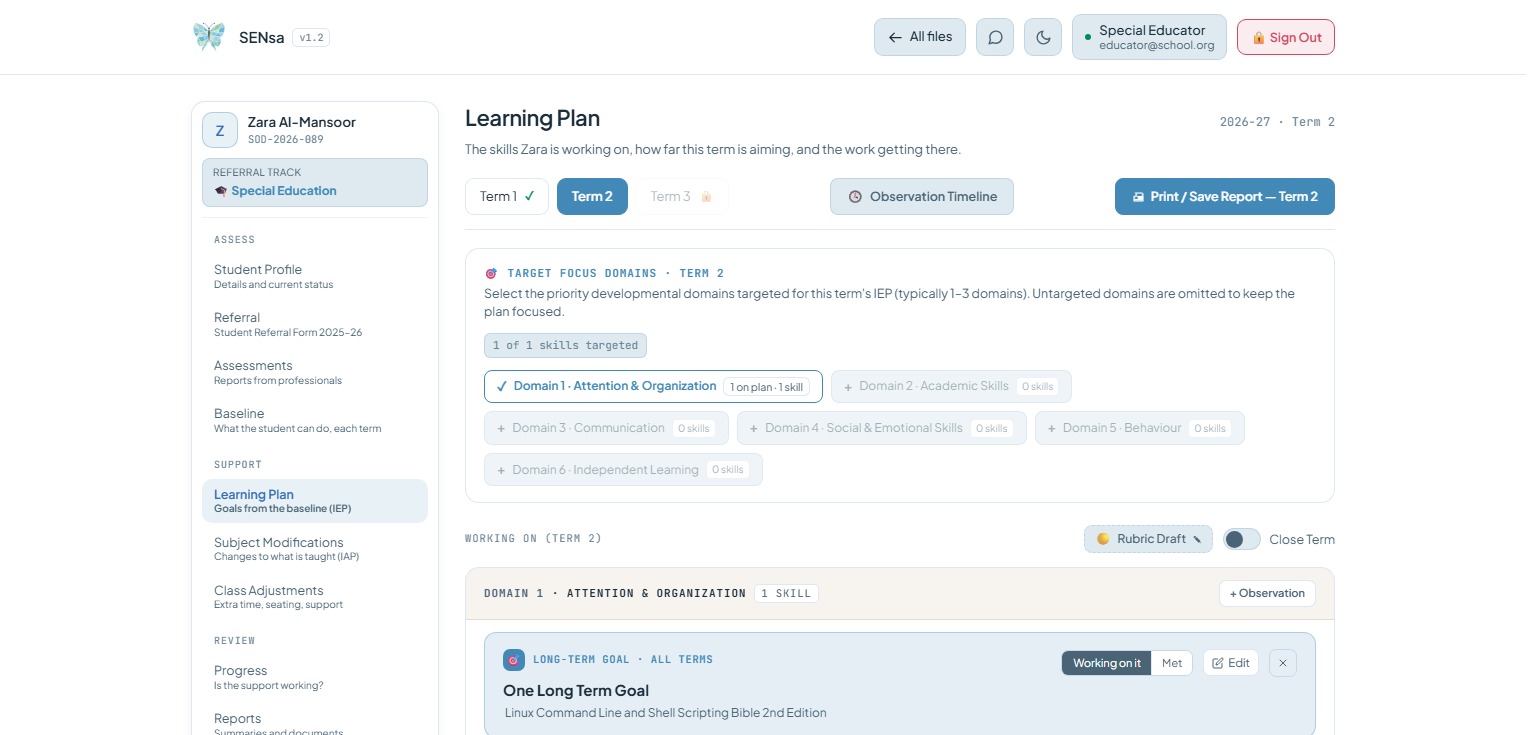
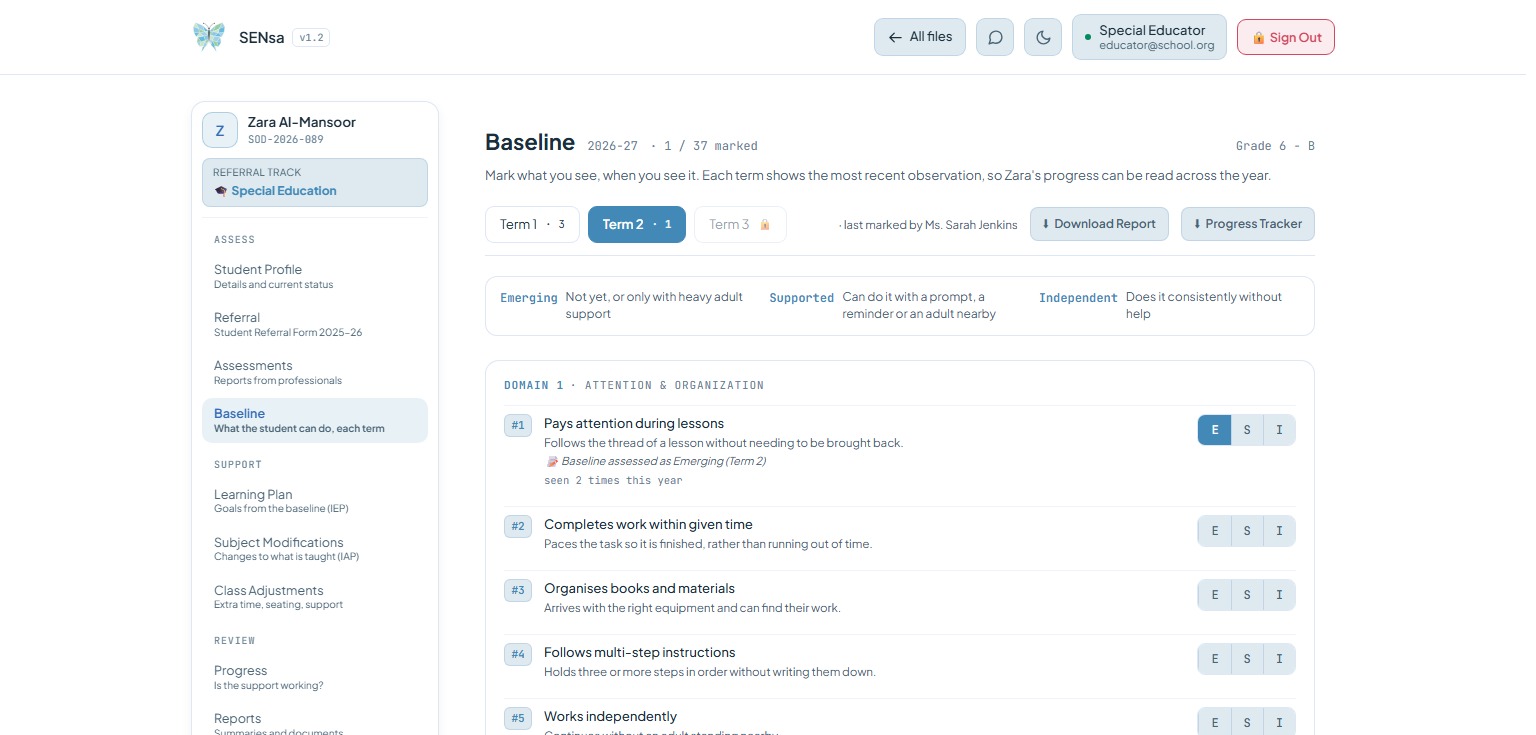
Attention, Communication, Academic, Social & Emotional, Behaviour, Motor & Independence — marked Emerging, Supported, or Independent each term, with no separate spreadsheet to maintain alongside it.

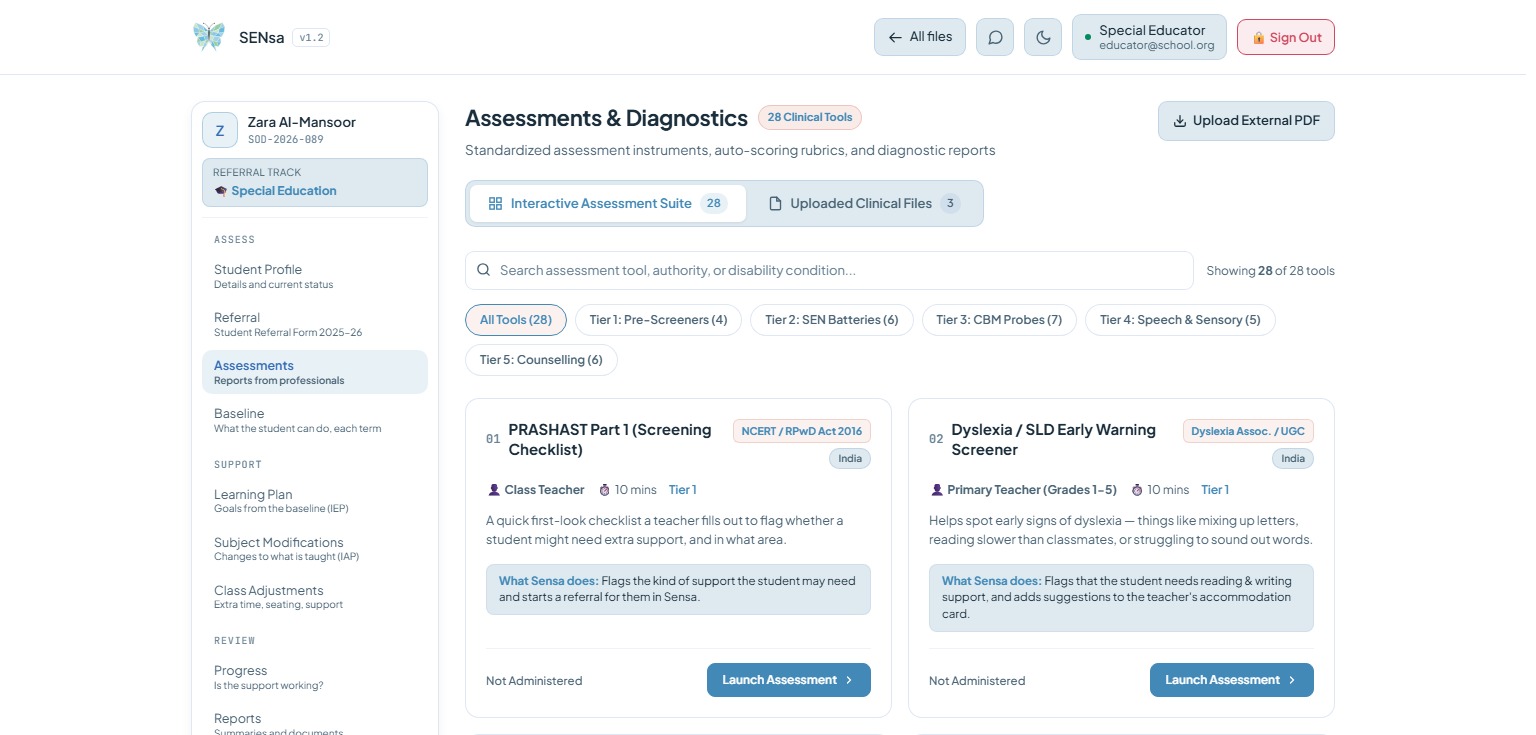
Screeners, SEN baselines, and progress probes, filled in in minutes — each one producing a number instead of an impression, with zero manual tallying.
Standards drawn from 4 regions: India (NCERT, NIEPID, AIISH), the US (DSM-5, CBM, PHQ-A/GAD-7), the UK (SEND Code of Practice, SDQ), and UAE policy (KHDA, ADEK).

The skills most worth writing a goal about — regressed or stuck — rise to the top automatically, every term. No blank page, no starting from memory.

Smart defaults, auto-scoring, and guided forms make data entry a two-minute task — so there's no separate "write the report" step left at the end of the day. The paperwork that used to cost an evening is finished the moment the data is.
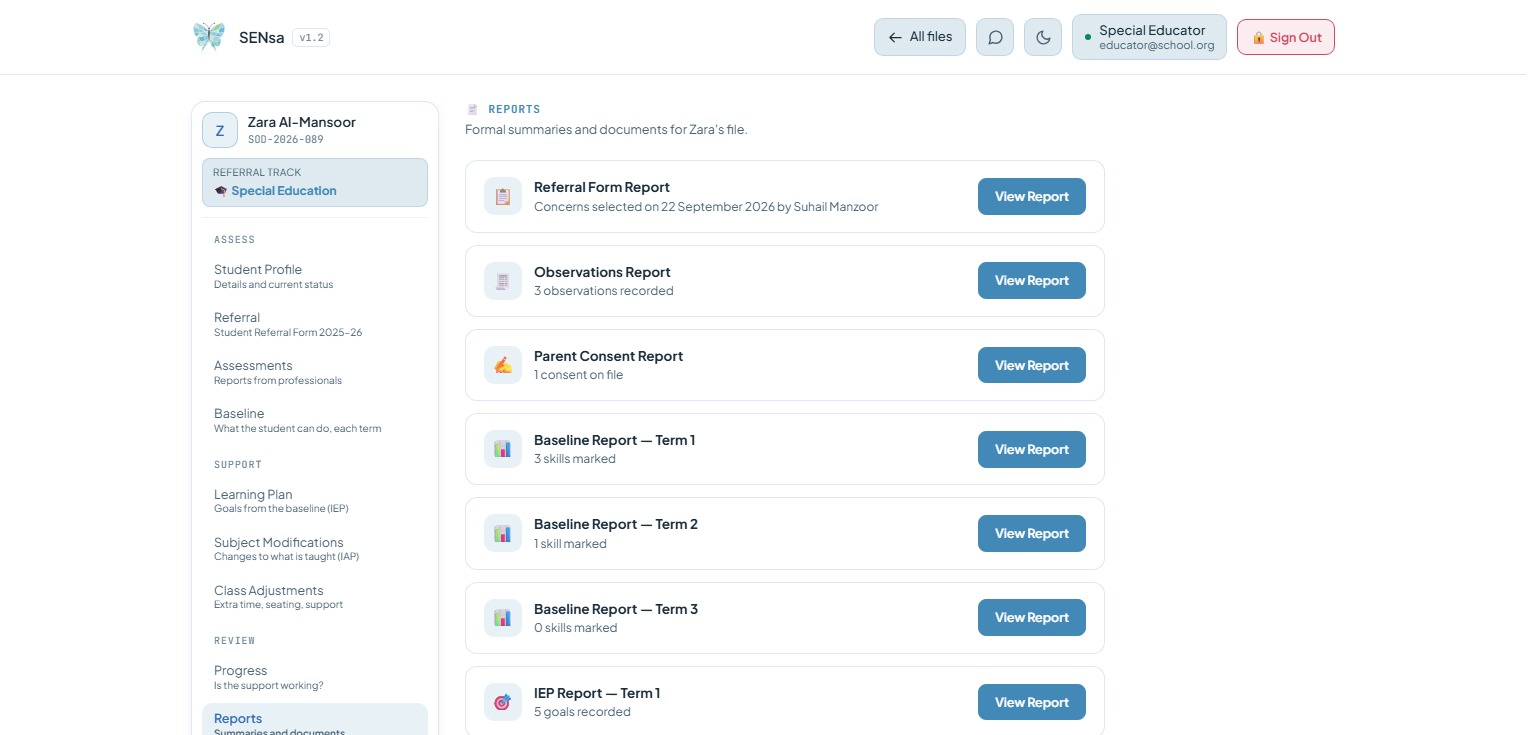
Referral, observations, parent consent, baseline, and IEP reports per term — each already assembled, ready to view or share.

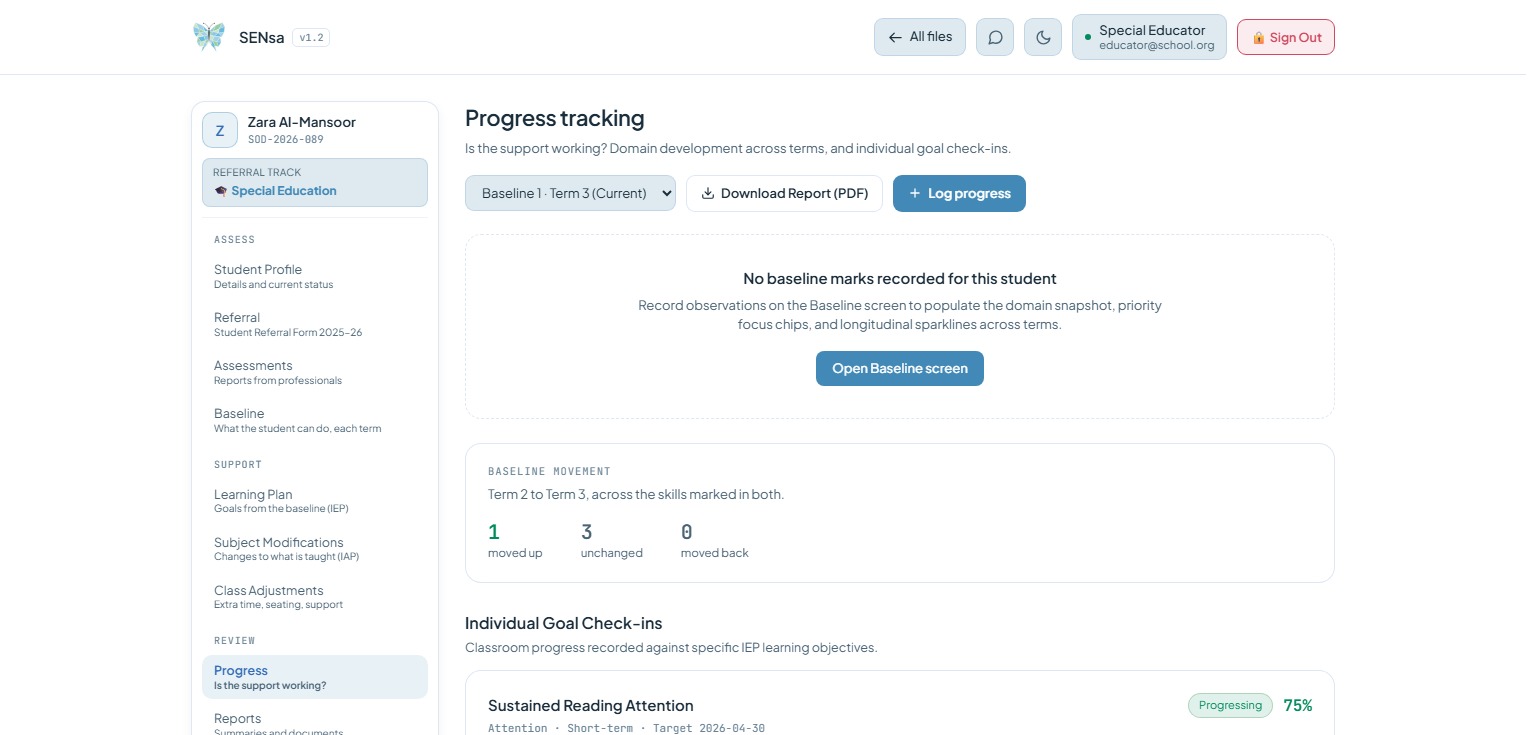
Baseline movement visualized term over term — what moved up, what's stuck — plus a downloadable PDF, no spreadsheet required.

One system, scoped to what each person actually needs — the special educator, the counsellor, the classroom teacher, the parent, the admin signing off at the end of term.
Less time on baselines and goal-writing, more time actually teaching the plan
Less time writing up notes, more time in the room with a student
No 20-page report to read — just what to do, today
No chasing the school for an update — it's already there
Audit-ready records, without anyone doing extra work to make them so
Most tools cover SEN or counselling, not both. A student needing both kinds of support shouldn't depend on two disconnected records agreeing with each other — and that split is exactly where a concern goes unrecorded without anyone deciding it should.
A student needing both academic and emotional support doesn't fall between two disconnected systems — and neither does the evidence of what was actually done for them.
Not a specialist therapy-centre tool. Sensa is designed around the realities of a regular classroom, not a clinic — and supports multiple curricula and regions out of the box.
A 20-page specialist report never gets read by a subject teacher. Sensa distills it into a short, actionable Classroom Card.
Board-exam concessions — CBSE included — need a documented history built up early. Because data entry happens automatically from day one, Sensa's evidence trail is already there when an accommodation request is filed, not assembled after the fact under deadline pressure.
Every screener and progress check produces a number, not an impression — and goals are ranked automatically from that data, not written from memory each term.
Parents see only their own child. Students see only their own check-ins. Navigation and actions a staff member isn't permitted to use simply don't appear — not a permissions error after the fact.
The same team, before and after switching to Sensa.
"I used to spend my prep period hunting through three folders. Now I spend it actually prepping for the student — the Classroom Card already tells me where they are."

"Session notes used to live in a locked drawer, which meant I was often the only one who knew a student needed help. Now that's one shared record — still confidential, but nothing I know stays only with me."

"I'm not a specialist, and I was never going to find time to read a 20-page report between classes. The accommodation card tells me exactly what a student needs in the two minutes I actually have."

A 30-minute walkthrough for your Head of Inclusion or SENCO, with your own student files in mind — no pricing page, just a conversation.
Request a Demo